top of page

Izvan razumne sumnje

.jpeg)


Language


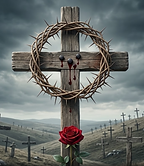


The Church lied to us
The Identity Theft: He watched how Emperor Constantine and the early Roman councils cut the faith off from its Hebrew roots. They replaced the sign of the covenant—the Seventh-day Sabbath—with Rome's pagan Day of the Sun. They took the holy Moedim (the Appointed Times of Leviticus 23) and replaced them with modified fertility festivals and winter solstice celebrations.
The Church lied to us
The air inside the sanctuary of Grace Fellowship was cool, scented with expensive espresso, and vibrating with the bass of a professional worship band. High above the stadium seating, massive LED screens flashed the title of the morning’s sermon: Free From the Bondage of the Law. Caleb sat in the third row, watching the Senior Pastor pace the stage in designer sneakers.
"God doesn't want you tracking rules, folks," the pastor proclaimed, a smooth smile catching the stage lights. "The Old Testament, the commandments, the Sabbath—that was a heavy yoke. It was nailed to the cross! We live in the age of grace. If you are trying to keep commandments, you are falling from grace."The crowd erupted in applause. People nodded, hands raised in an emotional rush of relief. For years, Caleb had nodded along too. It felt good to hear that God required nothing but a verbal confession and a weekly seat in the auditorium.
But today, the applause felt hollow. That week, Caleb had been translating Matthew chapter 7 from the original Greek text. A single verse had seized his mind, refusing to let go. He opened his leather-bound Bible on his lap, looking down at the red letters of Matthew 7:23:
“And then I will declare to them, ‘I never knew you; depart from Me, you who practice lawlessness!’”
Caleb stared at the final word. In the Greek, the word Yeshua used wasn't just a general term for being a bad person. The word was anomia. A- (without) Nomos (the Torah / the Law).
The Messiah wasn't warning against secular criminals. He was warning religious people—people who prophesied, cast out demons, and did wonders in His name—that they would be rejected because they lived without the Torah. They were practicing Torah-lessness. Caleb looked back up at the stage. The pastor was currently explaining why the biblical food laws didn't matter and why the Seventh-day Sabbath was an outdated Jewish tradition. A chilling realization washed over Caleb, striking him with the force of a physical blow: The church lied to us. We have institutionalized the very thing the Messiah warned would disqualify us.
The Investigation
That afternoon, Caleb didn't go to the church's Sunday football mixer. He sat at his kitchen table, surrounded by history textbooks, lexicons, and the scriptures.
The deeper he dug, the more the grand illusion crumbled. He began to see that mainstream Christianity had achieved a bizarre, unprecedented status: it had become the most explicitly lawless religion on earth.
Every other faith on the planet—from Islam to Buddhism to Judaism—expected its followers to strictly adhere to the foundational instructions of its deity. Only mainstream Christianity possessed a theological framework that actively argued against obeying the written commandments of its own Creator.
He traced the historical trail back to Rome, watching the pieces slide into place like gears in a sinister machine:
The Deception of "Grace": He saw how the letters of Paul had been systematically twisted—just as Peter warned they would be (2 Peter 3:16)—to make it look like grace was a license to disregard God's instructions, rather than the divine empowerment to actually keep them.
The Identity Theft: He watched how Emperor Constantine and the early Roman councils cut the faith off from its Hebrew roots. They replaced the sign of the covenant—the Seventh-day Sabbath—with Rome's pagan Day of the Sun. They took the holy Moedim (the Appointed Times of Leviticus 23) and replaced them with modified fertility festivals and winter solstice celebrations.
The Shifting Sand: By throwing away the immutable standard of the Torah, the church had left itself with no anchor. Morality became whatever the cultural consensus allowed.
The church hadn't just made a mistake; they had traded the eternal, unchanging Word of the Father for a human political system, slapping the Savior's name on the front of it.
The Confrontation
The next evening, Caleb met with his small group leader, Thomas, at a quiet local diner. Caleb brought his Bible, heavily underlined.
"Thomas, I need to ask you about something," Caleb said, sliding the text forward. "If Yeshua says that those who practice anomia—lawlessness, or living without the Torah—will be told 'I never knew you,' why does our church teach that the Torah is obsolete?"
Thomas sighed, taking a sip of his coffee with the patient, slightly condescending smile of a seasoned ministry veteran. "Caleb, buddy, you're falling into legalism. We aren't under the law, we're under grace. Christ fulfilled the law so we don't have to look at it anymore. That's Old Testament stuff. It's for the Jews." "But God says His laws are a perpetual covenant throughout our generations," Caleb argued, his voice tight but controlled. "Yeshua said in Matthew 5 that not one jot or tittle would pass from the Law until heaven and earth pass away. Heaven and earth are still here, Thomas. If we tell people they don't have to keep the commandments, aren't we teaching the exact lawlessness He warned against?"
Thomas’s smile faded. The warmth vanished from his eyes, replaced by a defensive coldness. "Look, Caleb, that kind of thinking is dangerous. It divides the body. If you start digging into the Hebrew roots and the Sabbath and all that, you're going to alienate people. Our church is about bringing people in, not burdening them with ancient rules. We have freedom in Christ."
"Freedom to sin?" Caleb asked softly. "Scripture defines sin as the transgression of the law (1 John 3:4). If you take away the law, you redefine sin. If the church is telling people they can break the Sabbath, ignore the Feasts, and disregard God's instructions without consequence, the church isn't saving people—it's comforting them on the Broad Way." Thomas slid his chair back, standing up. "I think you need to take a break from leading your ministry team, Caleb. You’re entering some very toxic theological waters. Let me know when you're ready to get back to pure grace."
The Exit Caleb sat alone in the diner booth for a long time, watching the neon signs flicker outside. The realization was heavy, but it didn't feel like a burden. It felt like reality breaking through a fever dream.
The church had built a magnificent cage. They had created a multi-billion-dollar industry designed to give people the emotional high of worship while completely absolving them of the requirement of covenant loyalty. It was a masterpiece of religious deception: a faith that claimed the Messiah but rejected the very Torah He embodied.
The following Friday evening, as the sun began to dip below the horizon, Caleb didn't prepare his clothes for Sunday morning.
Instead, he cleaned his house. He turned off his phone. As the twilight deepened, marking the arrival of the true Seventh-day Sabbath, he lit a candle at his kitchen table. He opened the Torah to Genesis, reading the ancient words with fresh eyes—unfiltered by church programs, denominational CEOs, or Roman traditions.
For the first time in his life, Caleb wasn't just playing a part in a religious audience. He was stepping back into the shipping lanes of the Patriarchs, realizing that true love for the Creator wasn't a fleeting emotion on a Sunday morning—it was a heart circumcised by the Spirit, walking in joyful, fierce obedience to every word that proceeds from the mouth of God.
bottom of page